← Back
Efficiency at Scale: Reducing claims analysis time by 80% with Artificial Intelligence.
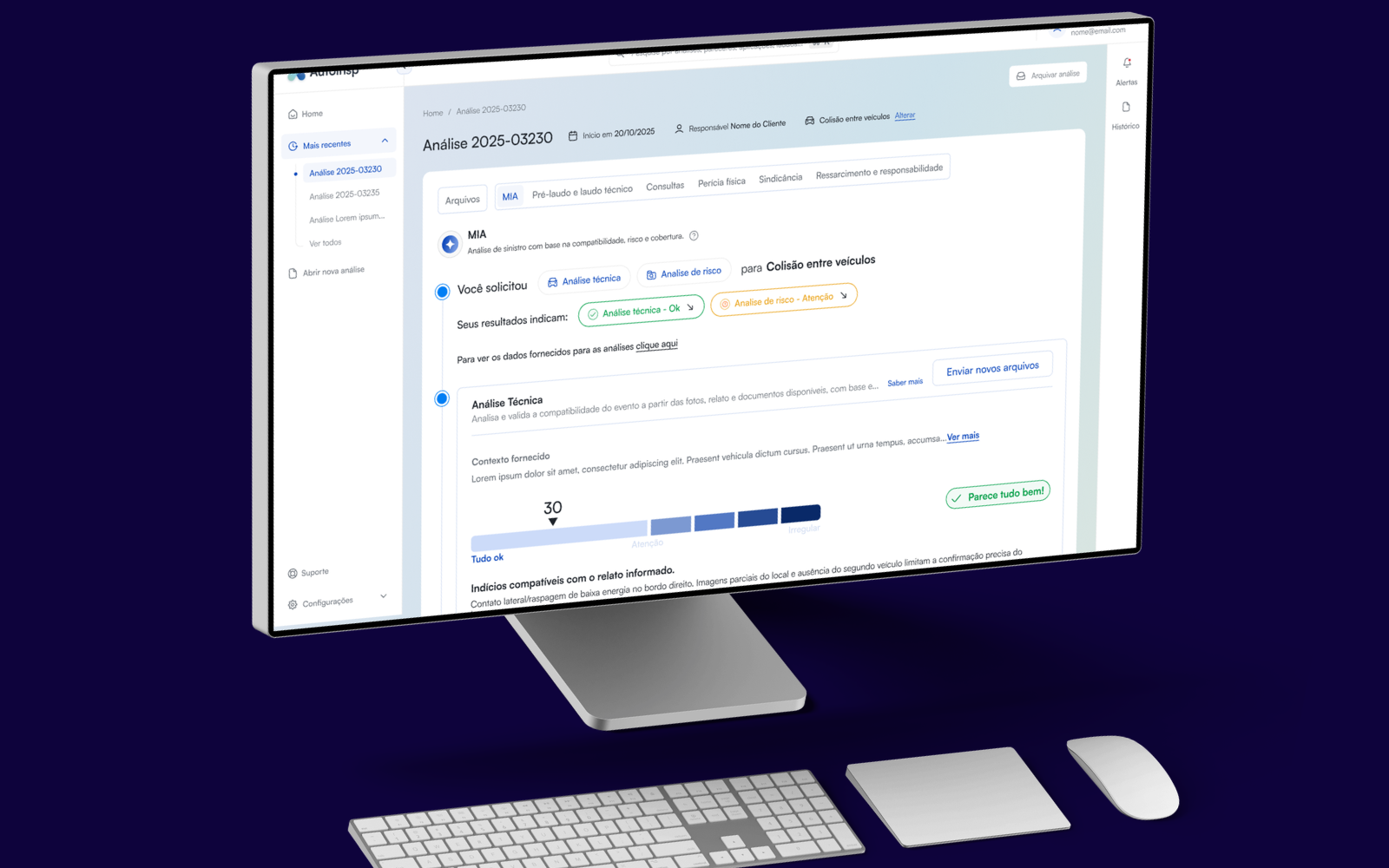
MIA: 90% accuracy, improved fraud detection, 9.2 min per claim.
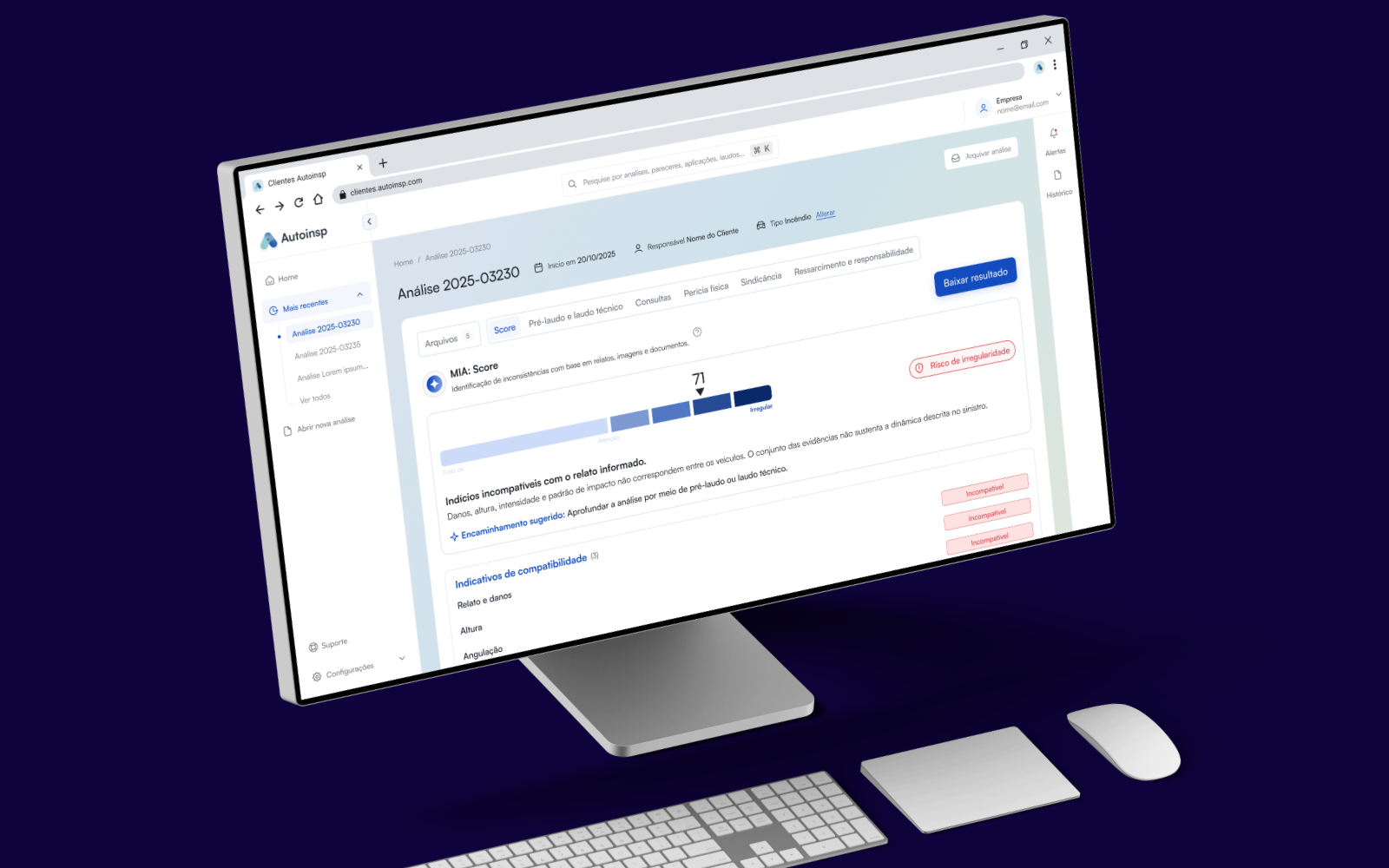
MIA: 90% accuracy, improved fraud detection, 9.2 min per claim.
41% of Brazil's P&C market, 220K claims/month, 12,000 analysts.
Retirement created a technical knowledge blackout.
Generic engines generated undue payments.
Seniority, not standardized logic.
Manual workflow blocked 50k claims/month.
Shadowed analysts until performing analysis independently.
Without domain understanding, just another rule engine.
7 types mapped, V2V collisions first.
Less coverage, faster validation.
Spreadsheet rules engine before any code.
100% logical alignment before the first line of code.
6 POCs, 51 parameters. Modular architecture for new verticals.
Automating triage so humans focus on high-complexity cases.
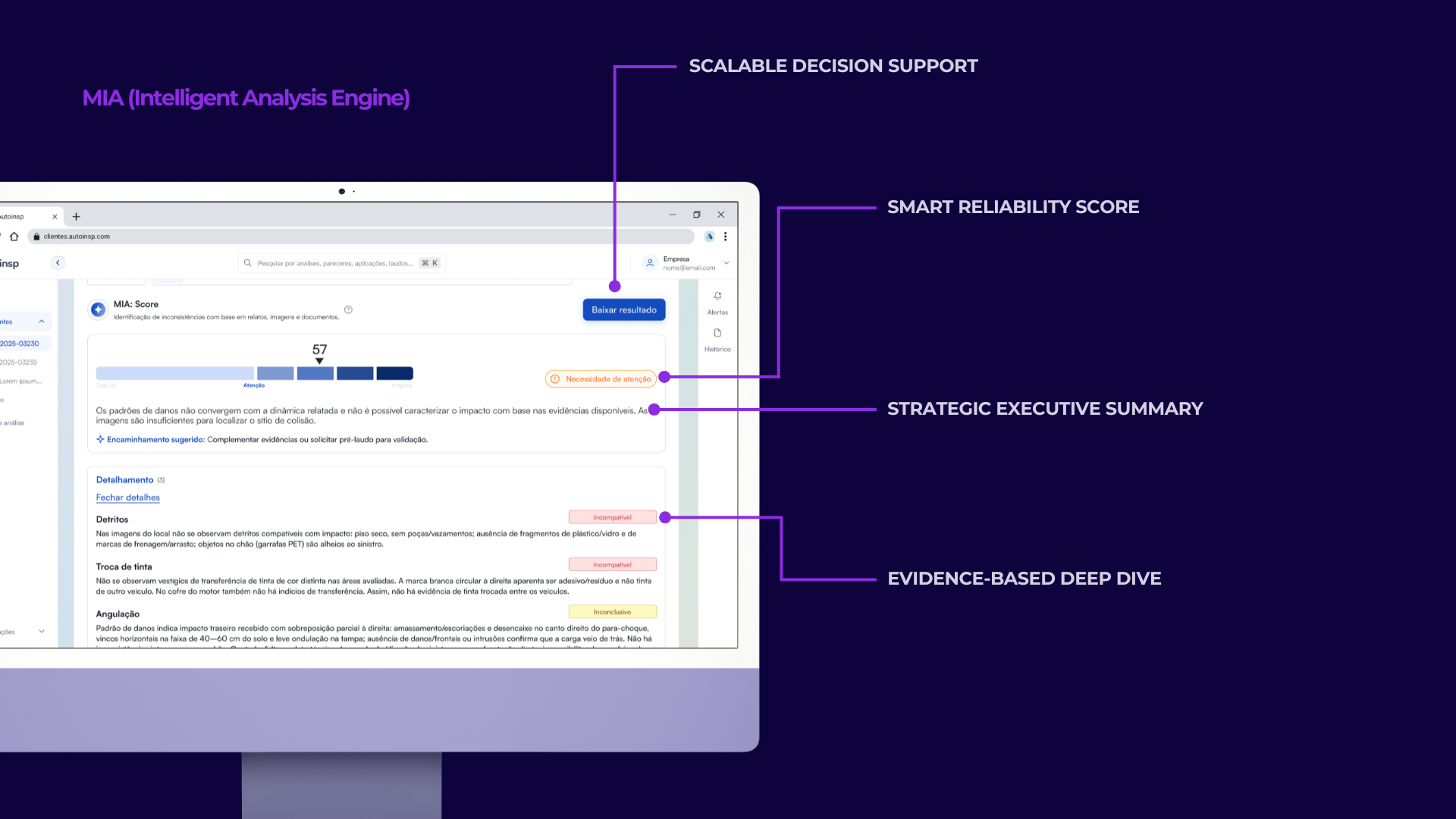
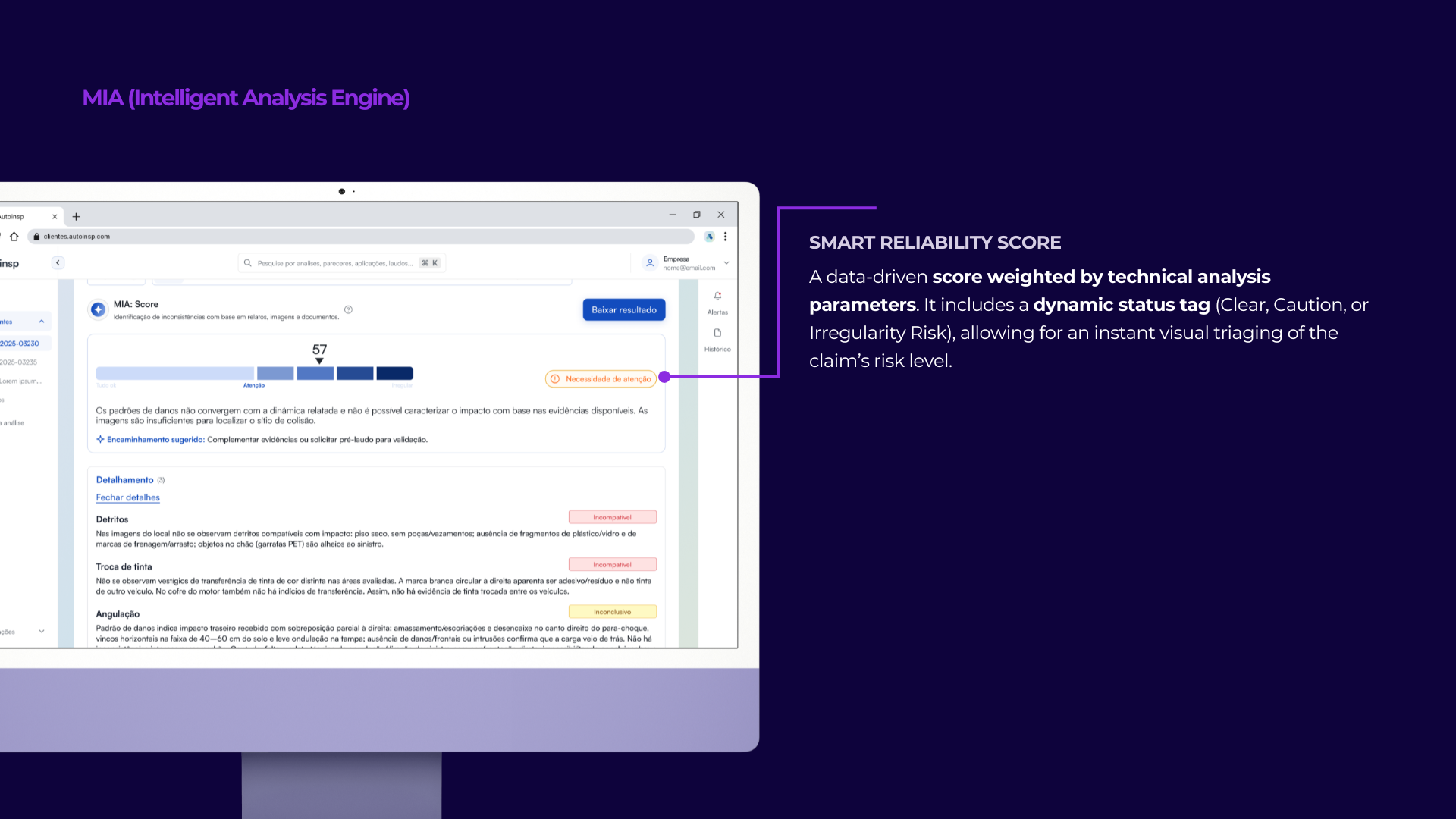
Instant triage with dynamic status tag.
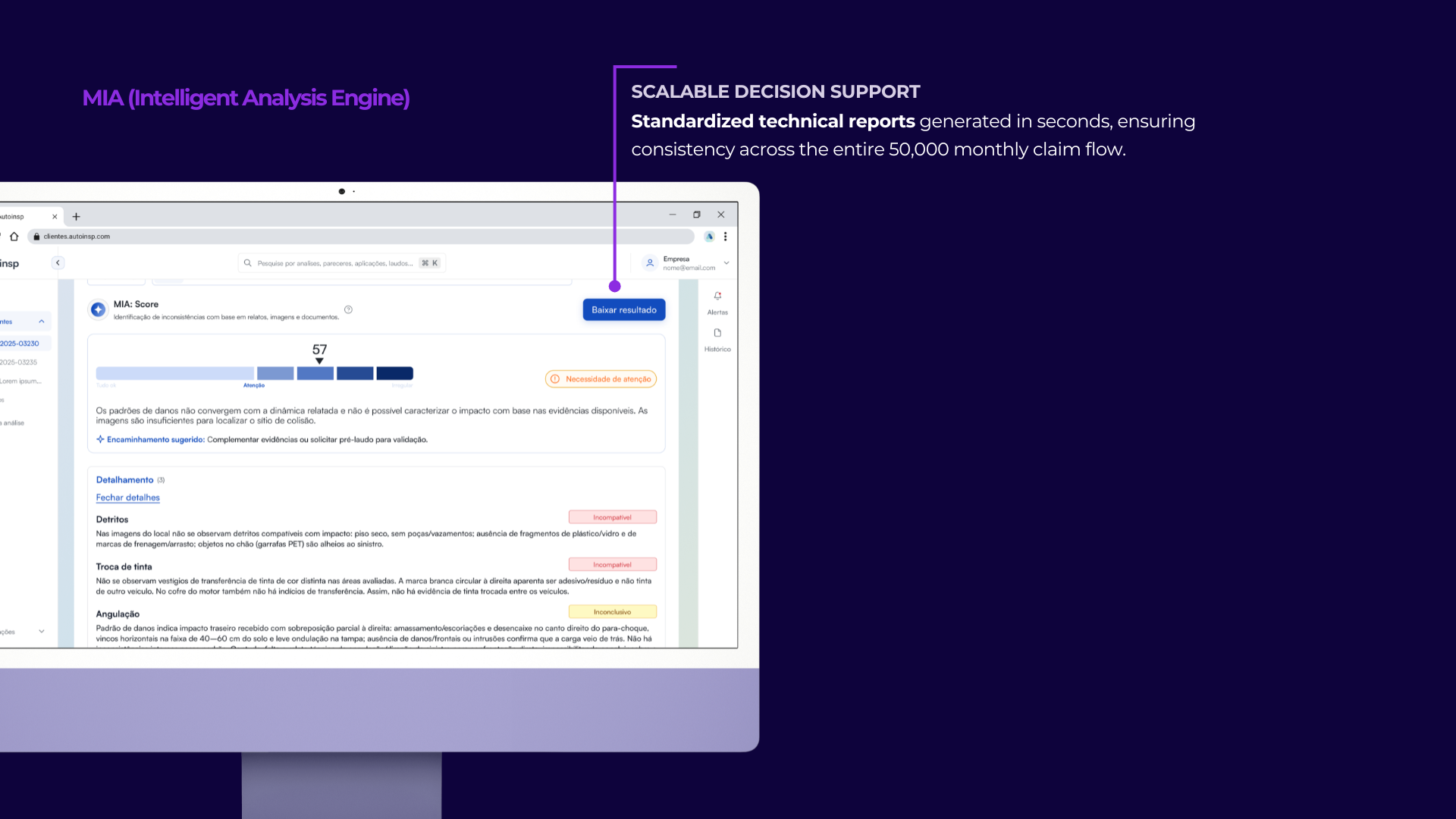
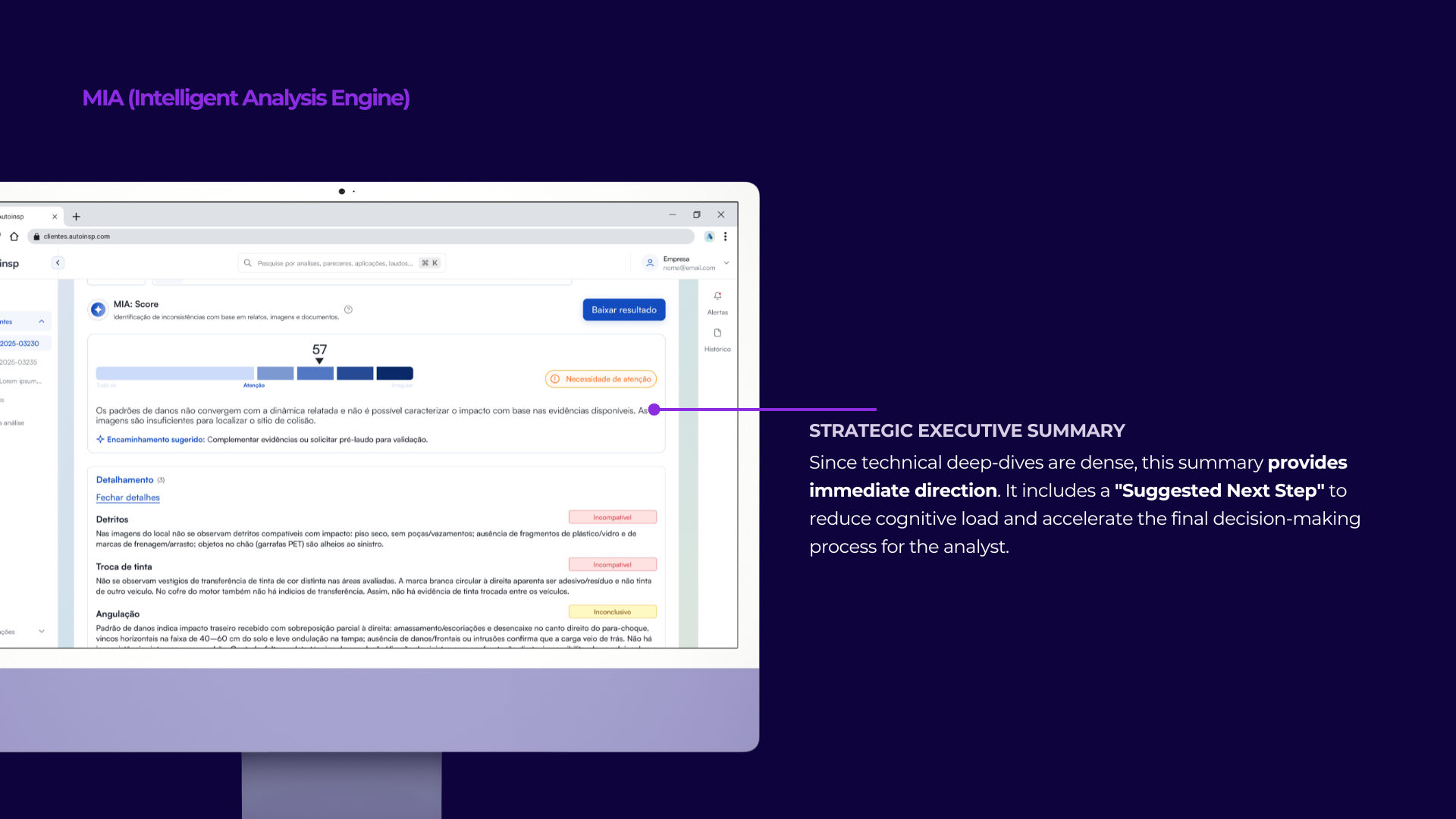
Seconds to decide.
Direction with Suggested Next Step.
Safe decisions for all levels.
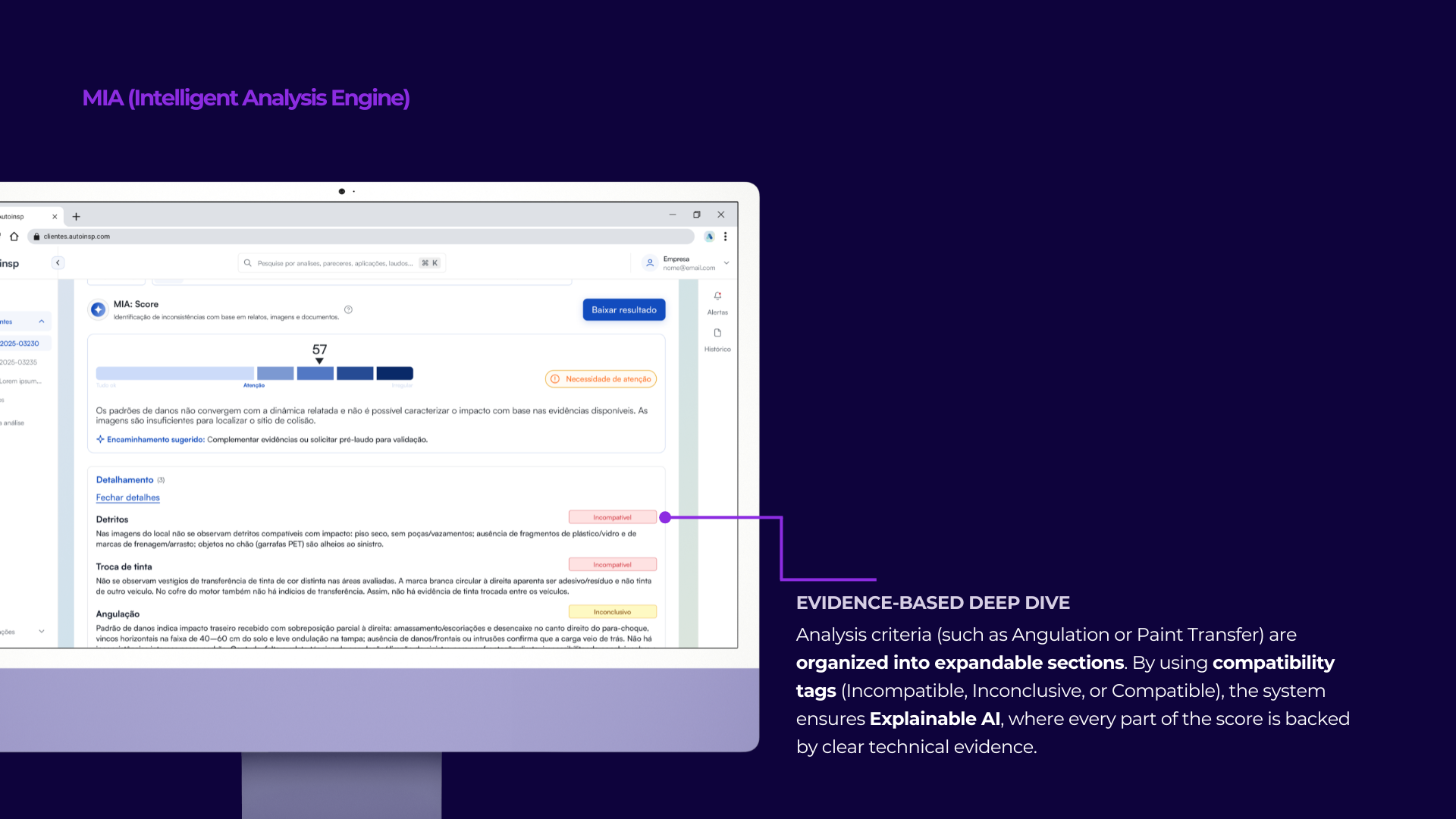
Explainable AI with evidence backing.
Every decision must be auditable.
Transversal Intelligence: Technical immersion generates a replicable blueprint for digitizing other sectors.
No-Code as Business Leverage: Standard method for new verticals, ensuring Time-to-Market agility.
Participatory & Evolutionary Design: Next cycle: platform experience with cross-sector analyst involvement.
MIA's success in automotive was only the first step. The roadmap now focuses on Integrated Digital Analysis, expanding to Contractual and Risk Analysis verticals. The goal: a single platform tracking the entire policyholder journey in real-time.